Web design for manufacturers that brings in requests from buyers

A buyer and an engineer come to a plant’s website with a specific job: find a product with the right specifications, confirm that you can make it and get a quote. We build a manufacturing website around that vetting: a technical catalog, capabilities, documents and a quick request for a quote.

Reply within 15 minutes · project assessment — free · pricing on request

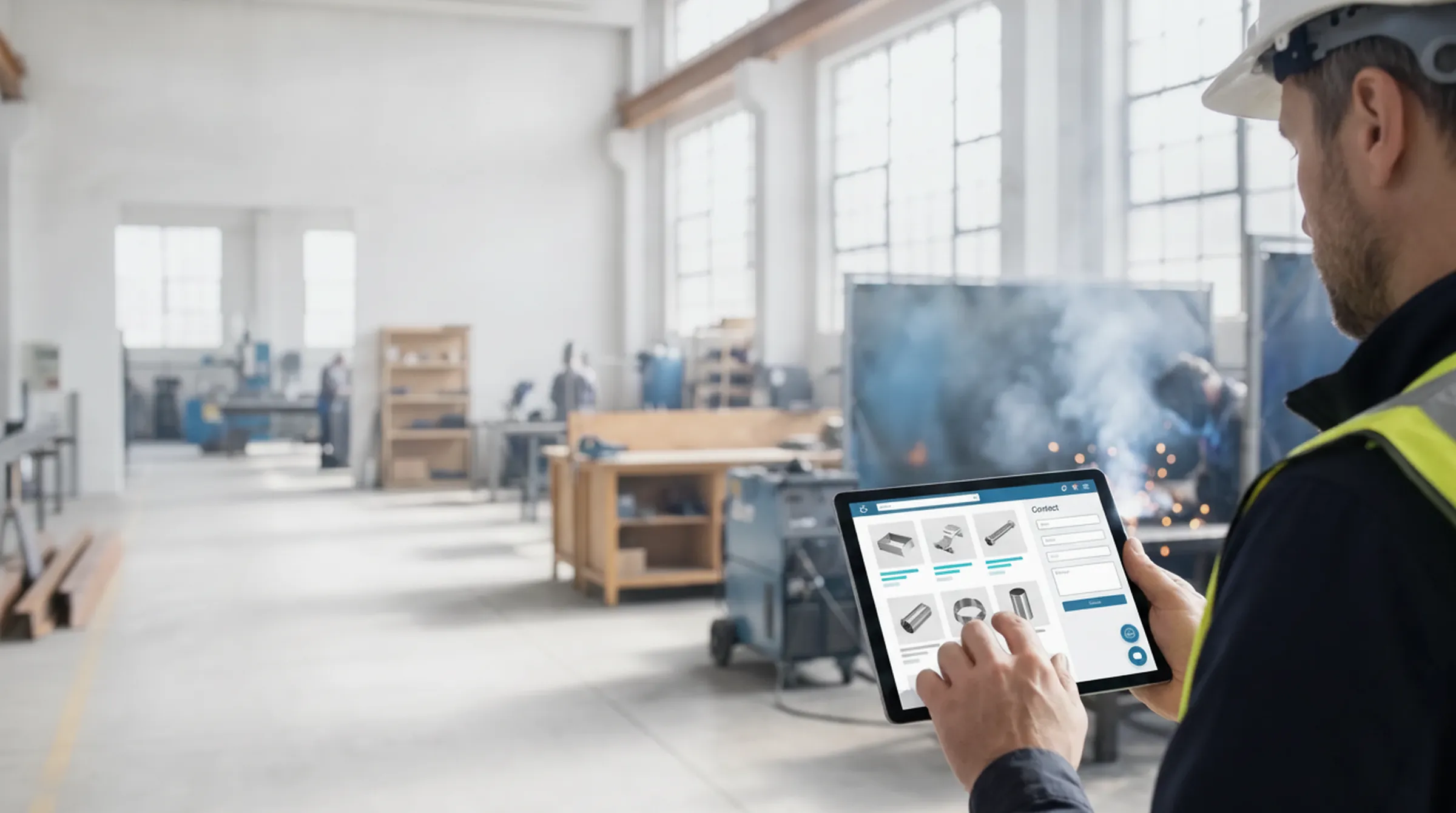
A metal fabrication shop floor with a welding area, and on an engineer’s tablet a manufacturer’s website with a catalog and a quote request form

Web design for manufacturers means building a site for a plant or manufacturing company where a buyer finds products with technical specifications, checks the equipment, certifications and delivery experience, and sends a request for quote with a drawing or specification. We build these sites for metal fabrication, machinery, food and other manufacturers and connect them to your ERP and CRM.

Why a manufacturer’s website doesn’t bring in orders

These are the situations plants and manufacturing companies bring to us. Almost always the site was built as a brochure, while the buyer needs a tool for choosing a supplier.

“Our products are described in one sentence and a photo”

An engineer can’t find dimensions, material grades, tolerances and standards, so they can’t add you to the approved vendor list and go to a competitor with a detailed catalog.

We build a technical catalog: specifications, applicable standards, variants, and drawings and data sheets to download. A buyer compares you with competitors without a call.

“All requests go to one shared inbox and get lost”

A request with a drawing sits in the inbox for days until someone forwards it to an estimator. The customer has already received a quote from another plant.

A request-for-quote form with drawing and specification upload creates a deal in the CRM, assigns an owner and sets a response deadline. Management sees how many requests are in progress.

“We make parts to order, but the site looks like a store of standard items”

Customers who need custom work don’t realize you take on those jobs, and they don’t write.

We show your capabilities: processes, maximum part sizes and thicknesses, equipment, quality control, and examples of parts made for each industry.

“We can’t be found in search, and new customers only come by referral”

New buyers search by product name and specification, and the site has no pages for those searches.

We design the structure around demand: separate pages for product types, manufacturing processes and the industries you serve. Each one is an entry point from search and ads.

What’s included in a manufacturer’s website

The scope depends on your sales model. Standard products, make-to-order work, a dealer network and exports each need a different structure.

Technical catalog

Sections by product type, product pages with specifications, variants, standards, drawings, 3D models and data sheets. Parametric filters for engineers.

Request for quote

A form with upload of drawings, specifications and BOMs, a way to add catalog items to the request, an acknowledgment and a response time.

Manufacturing capabilities

Shops, equipment with its specifications, processes, maximum part sizes, a lab and quality inspection. For a customer who orders custom work, this is the key argument.

Documents and certifications

ISO 9001 and other quality certificates, industry certifications such as AWS-certified welders or AISC certification for steel fabricators where they apply, a company profile and W-9 for the customer’s supplier onboarding.

Industries and delivered work

Pages for the industries you serve: construction, energy, oil and gas, agriculture. Examples of parts with a photo and a description of the task, without exposing the customer’s confidential data.

Distributor section

Terms of cooperation, price lists and catalogs for partners, a distributor application form, a map of representatives.

Export version

A catalog and documents in other languages for buyers abroad, with language versions configured correctly for search.

SEO foundation and markup

Organization and Product structured data, meta tag templates for product pages, fast loading of drawings and galleries, a structure built around product searches.

Integrations with the plant’s systems

A manufacturer’s website relies on data that already sits in your business systems. We connect them so the catalog and stock levels don’t have to be maintained by hand.

ERP and accounting

SAP Business One, Oracle NetSuite, Epicor, Microsoft Dynamics 365 Business Central or Odoo: items, specifications, stock levels and lead times are exported to the site on a schedule.

Sales CRM

HubSpot, Salesforce or Pipedrive: RFQs with drawings, routing between reps and estimators, and control of response times. More in CRM for manufacturing.

E-signature and EDI

DocuSign or PandaDoc for agreements and quotes, and EDI exchange with larger customers that require it.

B2B customer portal

For repeat customers and distributors: order history, production status, documents and a reorder from a saved specification.

Analytics and telephony

Google Analytics 4 with goals for RFQs and document downloads, plus call tracking and call recording.

Free project estimate and quote

Leave your contact — we'll review the task and send a quote with a scope breakdown and timelines. No pushy sales call.

Thank you! Request received — we'll get back with the estimate and quote within one business day.

How a buyer picks a supplier

In B2B purchasing several people make the decision: an engineer, a buyer, a manager. The site has to give each of them arguments.

Step 01

Searching for a product

An engineer looks for a part by name, specification or standard and lands on a product-type page or a product page.

Step 02

Technical check

They compare the parameters, download drawings and data sheets and see whether the job fits the capacity of your equipment.

Step 03

Checking reliability

The buyer and the vendor qualification team review documents, legal details, certifications, industries served and examples of delivered work.

Step 04

Request for quote

They send a specification or a drawing. The speed and quality of your reply matter: this step decides whether you make the bid list.

Step 05

Repeat orders

After the first delivery the customer returns through the portal or their account manager. The site remains a source of documents and new items.

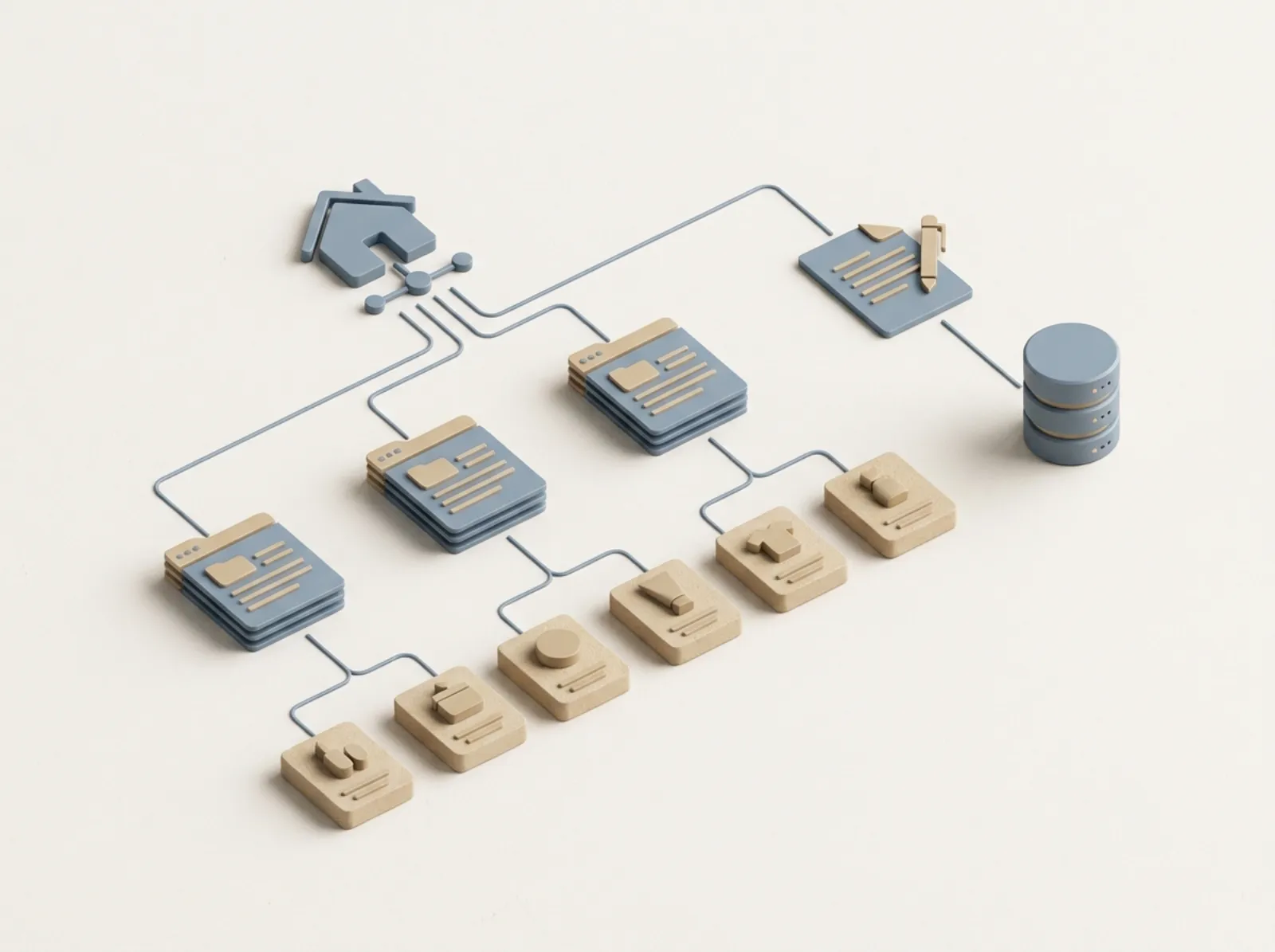
Isometric diagram of a website structure: a home page, sections and cards connected to a database
The product catalog, capabilities and RFQ connect to the ERP and the sales team’s CRM.

Standard products or make-to-order: what matters more on the site

Your sales model decides what the website of a manufacturer is built around.

CriterionStandard productsMade to order
Main sectionA catalog with specifications and availabilityCapabilities, processes and delivered parts
Key actionRequesting a price and availability by itemRequesting a quote from a drawing or specification
What buyers search forItem name, size, standardProcess type, kind of structure, “custom manufacturing”
ProofCertificates, data sheets, stock levelsEquipment, quality control, examples, industries
IntegrationsAn ERP with items and stockA CRM with a route from the request to the estimator

Who it’s for, and who it isn’t

A good fit if

  • A plant or manufacturing company that wants requests from new customers, not only from referrals.
  • A metal fabrication, machinery or other made-to-order manufacturer that needs to show its capabilities.
  • A company with a wide range of items that buyers find hard to choose from a PDF price list.
  • A manufacturer entering new regions or export markets that needs a catalog in several languages.

Not a fit if

  • A manufacturer that works only under long-term contracts with a few customers and isn’t looking for new ones.
  • You can’t provide technical data about your products. Without it a manufacturer’s website doesn’t work for the buyer.

A website for metal fabricators and other manufacturers: what we look at

For metal fabricators and other make-to-order manufacturers, the customer’s main question is whether you can make their part on time and to the right quality. So the site shows equipment in detail: plasma and fiber laser cutting, press brakes, welding cells, powder coating booths, with working dimensions stated. Separately we show quality control, welder certification and the standards your parts are built to.

For series production the catalog matters more. A buyer is looking for a specific size and comparing the parameters of several suppliers. If the product page has full specifications, standards and documents to download, you reach the shortlist without extra calls. Product pages with unique descriptions also bring search traffic on item names.

One caution on drawings: if you work with export-controlled or confidential technical data, a public upload form isn’t the place for it. We can set up a secure channel and an NDA step before files are accepted, and you should confirm the requirements with your own compliance advisor. We build manufacturers’ websites remotely, with a visit to photograph the production floor when needed. Real photos of shops and equipment work better than any stock image, because a buyer sees an actual plant.

After launch, the site can be tied to your sales process in one system. If requests are handled in email and spreadsheets, the logical next step is a CRM for manufacturing, and to bring in new customers, marketing for manufacturers.

Checklist: what to prepare before we start

The more complete the materials, the more accurate the structure and the faster the launch. We’ll help you collect whatever is missing.

  • A product range with specifications, standards and drawings.
  • A list of equipment with working parameters and photos of the shops.
  • Certificates, declarations, industry certifications and legal details of the company.
  • Examples of parts you’ve made, by industry, that you’re able to show.
  • The name of your ERP and CRM and access to an export of your item master.
  • How requests are handled: who prepares the quote and how quickly.

FAQ: Web design for manufacturers

We quote on request after a brief. The price depends on the size of the catalog, the integrations with your ERP and CRM, language versions and a customer portal. The site of a small shop and the portal of a plant with thousands of items are different projects.
Yes. Items, specifications, stock levels and lead times are exported from systems such as SAP Business One, NetSuite or Epicor on a schedule. Descriptions for the site can be added by hand where needed.
The form accepts drawings, specifications and BOMs, creates a deal in the CRM and assigns an estimator or a rep. The customer gets an acknowledgment and a response time.
It does if you have repeat customers or distributors. The portal stores specifications, documents and statuses, and a reorder takes a minute.
Yes. We work with manufacturers remotely, wherever they are. If you need photography of your shops and equipment, we arrange a visit.
It puts the emphasis on capabilities: equipment with dimensions, processes, quality control, standards and examples of structures. A customer for fabricated structures picks a contractor for their job, not a ready-made product.
Yes. A structure by product type and service, markup, speed and meta tags are built in from the start. After launch you can add SEO and advertising.

Tell us about your task — we'll come back with a quote and timeline

In response you'll get a project estimate, a quote broken down by scope, and timelines. Usually within one business day. Free, no strings attached.

4 of 6 project slots open this week.

Request received

Thank you! We'll get back with the project estimate, the quote and the timeline — usually within one business day.

Get an estimate