A chatbot for medical clinics that books patients around the clock

A clinic’s front desk is swamped with the same questions: how to book, what a visit costs, how to prepare for an ultrasound, where the lab results are. A chatbot takes those conversations over on your website, WhatsApp Business and SMS, books the patient into an open slot from your EHR and reminds them of the visit. Your front desk staff look after the patients in the lobby instead of the phone.

Reply within 15 minutes · project assessment — free · pricing on request

A clinic lobby with a patient holding a smartphone showing a chat with an appointment booking bot, and blurred figures of medical staff in the background

A chatbot for medical clinics is a bot in a messaging app or on your website that books a patient with a provider into an open slot from the EHR or practice management schedule, confirms and reschedules visits, sends preparation instructions for tests and answers common questions. The bot doesn’t diagnose or give medical advice: those questions go to the front desk or a clinician.

Where a clinic loses patients before the first visit

Situations that multispecialty centers, single-specialty practices and diagnostic centers bring to us.

“The front desk line is busy, and the patient books with another clinic”

At peak hours the phone line is overloaded, and a patient in pain won’t hold.

The bot takes bookings alongside the front desk: the patient picks the provider and time and the appointment lands in your EHR right away.

“Patients don’t show up and don’t call to cancel”

An empty slot on a provider’s schedule is lost revenue that can’t be recovered.

Reminders the day before and on the day, with “Confirm” and “Reschedule” buttons. The freed slot is open for booking again.

“Staff spend the whole day explaining how to prepare for lab work”

The same questions about preparation, pricing and hours take time from the people standing at the front desk.

The bot sends a prep sheet straight after a test is booked and answers common questions using texts the clinic has approved.

“People message late at night, and by morning they’ve moved on”

The wish to book comes in the evening, when the front desk is closed.

The bot works around the clock and books the nearest free slot, leaving complex questions for the front desk in the morning.

What a chatbot can do for a medical center

We choose the flows to match the clinic’s profile: multispecialty center, diagnostics, women’s health, pediatrics, dentistry or aesthetics.

Booking with a provider

Choice of specialty, provider, location and time from the EHR schedule. A patient can book a specific doctor or the nearest open slot.

Confirmation and rescheduling

Reminders before a visit, confirmation with one tap, and rescheduling and cancellation without calling the front desk.

Preparation for tests

Prep sheets for ultrasound, lab work, endoscopy and other procedures arrive automatically after booking and again the day before.

Answers to common questions

Hours, locations, what to bring to a visit, accepted insurance plans and self-pay information on request. The clinic approves the wording.

Result notifications

A notice that results are ready and a link to the patient portal, if your EHR provides one.

Follow-up visits

An invitation for a follow-up appointment, a preventive checkup or the next procedure in a course, based on the due date.

Post-visit survey

A rating of the visit, with complaints routed straight to the practice manager, and a link to leave a public review sent to every patient.

Handoff to a person

Any question about symptoms, treatment or complex cases is passed to the front desk or a clinician on duty.

Integrations with medical systems

A bot is only useful when it sees the real schedule and books directly into the clinic’s system.

EHR and practice management

athenahealth, NextGen, eClinicalWorks, Tebra, DrChrono and other systems with an API or an online scheduling module, plus EMIS and SystmOne in the UK: schedule, bookings and visit statuses.

CRM

HubSpot, Salesforce or Pipedrive for inquiries that did not become a booking: questions about programs, self-pay packages, referrals.

Messaging

Website chat, WhatsApp Business, SMS and Facebook Messenger, with Telegram as an extra channel. One flow across several channels, with the conversation saved in the patient’s history.

Online payment

Deposits for consultations, telehealth and checkups through the clinic’s payment processor.

Maps and review sites

Links to the clinic’s Google Business Profile and Healthgrades pages for reviews after a visit.

Free review: which chatbot you actually need

Leave your contact — we'll look at your channels and typical requests and tell you what a bot can handle, whether a builder is enough and what it would change. No sales pitch.

Thank you! Request received — we'll get back with a chatbot scenario review within one business day.

The patient’s path in a clinic chatbot

We design the flow together with the head of the front desk so that the bot works the way your best receptionist does.

Step 01

Inquiry

The patient writes in a messaging app or opens the chat on the website. The bot offers to book, check a price or ask a question.

Step 02

Consent and details

Before booking, the bot shows a privacy notice, takes the patient’s consent and asks for the name and phone number needed for the record.

Step 03

Choosing a provider and time

Specialty, provider, location and a free slot from the EHR. The appointment is created in the schedule immediately.

Step 04

Prep and reminders

A prep sheet, a reminder the day before with a confirmation, and the address and directions.

Step 05

After the visit

A rating of the visit, a notice that results are ready and an invitation for a follow-up visit as prescribed by the provider.

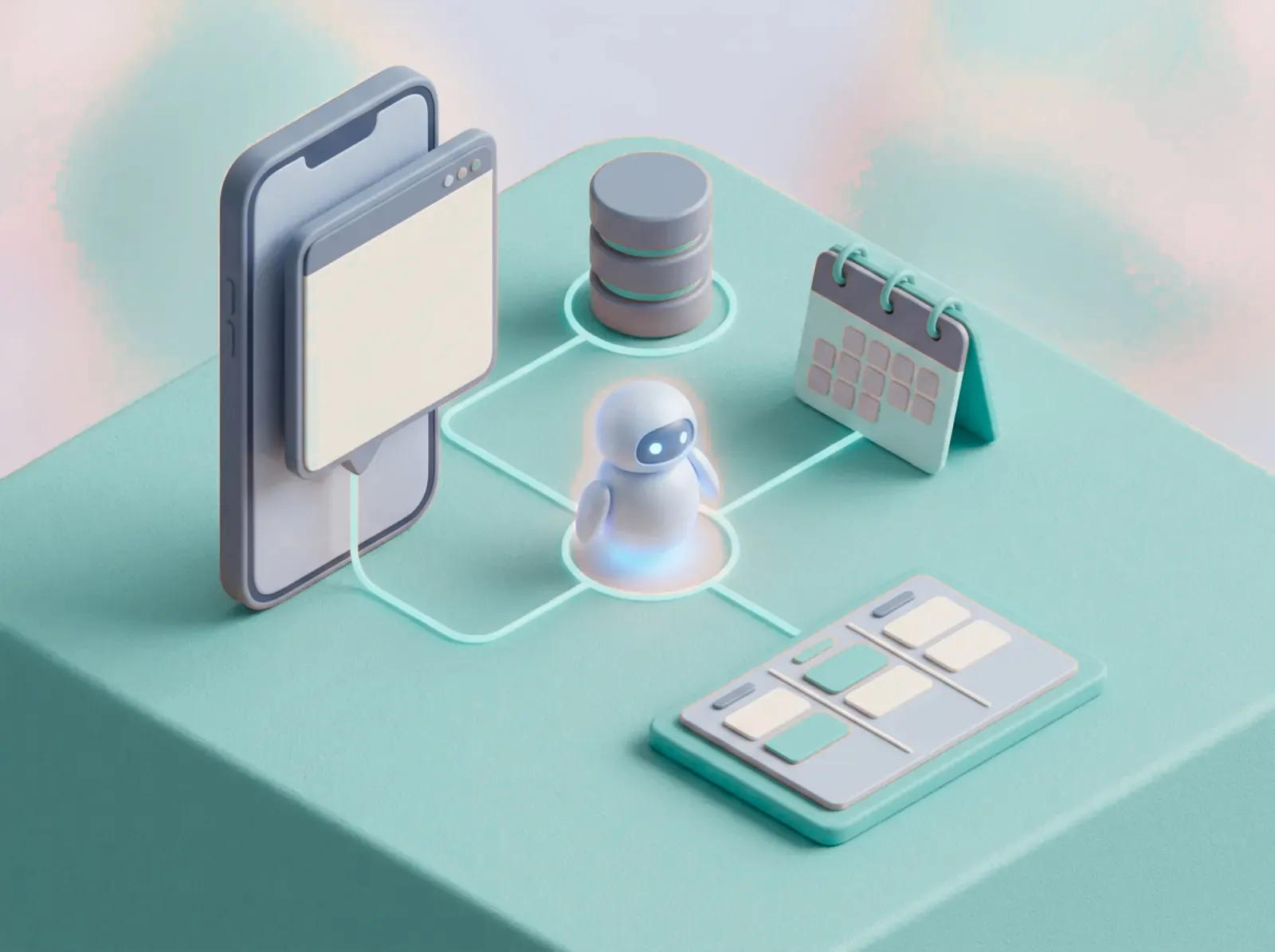
Isometric chatbot diagram: a smartphone with a chat connected to the bot, a database, a booking calendar and a lead board
The bot links the patient’s conversation to the providers’ schedule and the record in your EHR.

What the bot does itself, and what it hands to a person

A clear boundary protects patients and the clinic from mistakes.

Patient questionBotFront desk or clinician
Book, reschedule or cancelDoes it by itself using the EHR scheduleSteps in for non-standard situations
Price of a visit or a testAnswers from the clinic’s price listConfirms the cost of a complex treatment plan
Preparation for a testSends the approved prep sheetAnswers if the patient has contraindications
Symptoms, which doctor to seeDoesn’t assess; offers to connect with the front deskPicks the right specialist
Interpreting results, treatmentDoesn’t answerOnly a clinician, at a visit or consultation

Who it’s for, and who it isn’t

A good fit if

  • A multispecialty clinic or diagnostic center with a large flow of calls.
  • The clinic runs an EHR or practice management system with an API or an online scheduling module.
  • Patients write in messaging apps, and the front desk can’t keep up with replies.
  • No-shows are common, and you need a visit confirmation process.

Not a fit if

  • A one-provider office booked weeks ahead: a booking widget is enough.
  • You expect the bot to give advice on symptoms and treatment: that is a clinician’s job.

What to keep in mind in a chatbot for healthcare

Health information is a specially protected category of data, so the requirements for a clinic’s bot are stricter than for a store’s. In the US, a clinic that is a HIPAA covered entity needs a business associate agreement with any vendor handling protected health information, and ordinary SMS or consumer messaging apps aren’t a safe place for it. In the UK and EU, health data is special category data under GDPR. Before booking, our bot shows a privacy notice and takes the patient’s consent, conversations are stored in the clinic’s own systems rather than the contractor’s, and access is restricted. We don’t send diagnoses or results through a messaging app: the bot only says that results are ready and points to the secure patient portal.

The second point is the limit of medical responsibility. An AI bot can sound convincing, but it must not assess symptoms or advise on treatment. We restrict it to texts approved by the clinic about booking, preparation, prices and clinic rules. If a patient describes an urgent condition, the bot tells them to call emergency services (911 in the US, 999 in the UK) and immediately hands the conversation to the front desk. Automated texts to patients also fall under consent rules such as the TCPA in the US, which we build into the flow.

The third is the link to the EHR. Without it the bot turns into a “leave a request” form, and the front desk still has to call back. With the integration, the bot sees the real slots of providers, with appointment length, location and type of service taken into account. Before starting, we check what data your EHR exposes and build the booking flow around it.


Checklist: what to prepare before launch

These materials become the basis of the flows and the answer base.

  • The name of your EHR and access to its API or online scheduling module.
  • A list of specialties, providers, locations and services available for online booking.
  • Your current price list and booking rules: deposits, patient ages, referrals.
  • Prep sheets for tests that your clinicians have approved.
  • Answers to common questions that front desk staff give today.
  • Your privacy policy and the text of the patient consent.

FAQ: Chatbot for medical clinics

Yes, if the EHR has an API or an online scheduling module. The bot sees providers’ open slots and creates the appointment in the schedule. The details depend on the system, and we check them before the project starts.
No. The bot books, reminds, sends prep sheets and answers organizational questions. Anything about symptoms, diagnoses and treatment goes to the front desk or a clinician.
The bot takes consent to data processing before booking, and conversations and data are stored in the clinic’s systems with access control. We structure the flow around the privacy rules that apply to you, such as HIPAA in the US or GDPR in the UK and EU. Test results are not sent through a messaging app, only a notice and a link to the patient portal.
We price it by scope: the number of flows and channels, integration with your EHR and CRM, and whether AI is needed for open questions. We break the estimate down after a brief and a check of what your EHR can do.
Where your patients write: most often website chat, SMS and WhatsApp Business. One flow can run in all channels so that the patient picks the most convenient one.
The bot sends reminders and lets patients confirm or reschedule a visit with one tap. A patient who can’t come frees the slot in advance, and others can take it.

Tell us about your task — we'll come back with a chatbot scenario

You'll get a review of your inbound conversations, a bot scenario and a clear recommendation: builder or custom. Usually within one day. Free and no obligation.

4 of 6 project slots open this week.

Request received

Thank you! We'll come back with a review of your conversations, a bot scenario and a format recommendation — usually within one business day.

Get an estimate